AlgoWay Blog
Guides, manuals and platform references.
Core
- All articles
- FAQ
- PineConnector alternative
- TradersPost alternative
- Automate TradingView alerts
- Automate Telegram signals
- AlgoWay CopyTrader
- cTrader Copier
- TrendSpider with AlgoWay
- How to Automate a TradingView Indicator with Dynamic SL/TP and 1% Risk on MT5
JSON & Alerts
- JSON schema
- Manual alerts
- TradingView without paid subscription
- AlgoWay Strategy Integration in Pine Script
- Python Trading Bot Webhook Integration
- TRALADAL - TradingView Alert Adapter
- TradingView Order Action Alert
- How to use Clone Mode
MT5 / Expert Advisors
Errors
Integrations
- MetaTrader 5
- Tradovate
- TradeLocker
- Match-Trader
- DXtrade
- Capital.Com
- Binance
- Bybit
- MEXC
- OKX
- Bitget
- Hyperliquid
- BingX
- Alpaca
- Interactive Brokers
- Gate.io
- Coinbase
- TooBit
- WEEX
- ProjectX
- Rithmic
- cTrader logic
Other Publications
- MT5 EA Webhook JSON Reference
- OANDA MT5 with AlgoWay
- Buy Webhook via Buy Me a Coffee
- AlgoWay vs PineConnector
- Compare AlgoWay with other trading automation tools
- AlgoWay Red News Filter
- Why Paid Trading Indicators Avoid Verifiable Backtests
- How Trade Automation Tools Mislead You
- utomating a Prop-Firm Eval End to End:
- ATP Premium Indicator Testing Bot
- Why TradingView Backtests Win but Live Trades Lose
- Best Prop Firms for Trading Automation and Telegram Signal Copy in 2026
- Four AIs, One Trader, and the Strange Case of TradingView to Alpaca
- TradingView Automation
AlgoWay Strategy Lab
TradingView to Binance Webhook Automation with AlgoWay
AlgoWay connects TradingView alerts to Binance through webhook automation. You create a Binance webhook in AlgoWay, add your Binance API credentials, paste the AlgoWay webhook URL into TradingView, and send a structured JSON alert message. When TradingView triggers the alert, AlgoWay receives it and routes the trading command to Binance.
This guide explains how to build a TradingView to Binance webhook for automated crypto trading, Binance Spot automation, Binance Futures automation, and strategy alert execution without building your own server-side trading bot.
The basic route is:
TradingView alert -> AlgoWay webhook -> Binance API -> Binance Spot or Futures orderThis guide covers the complete TradingView-to-Binance workflow, including API key creation, AlgoWay webhook setup, Spot and Futures settings, JSON alert configuration, testing and troubleshooting.
What AlgoWay Does in a Binance Automation Setup
TradingView is the signal source. Binance is the execution destination. AlgoWay is the automation layer between them.
In practical terms, AlgoWay helps you:
- receive TradingView webhook alerts;
- validate the incoming JSON message;
- route the order to the selected Binance webhook;
- support Binance Spot or Futures settings depending on your webhook configuration;
- manage order size through AlgoWay quantity logic;
- inspect received alerts and execution responses in webhook logs;
- avoid maintaining a custom webhook server, parser, and Binance API client.
AlgoWay does not create a profitable strategy by itself. It automates the execution route after your strategy, indicator, or manual TradingView alert sends the command.
TradingView to Binance: How the Webhook Flow Works
A TradingView alert can send an HTTP webhook request to a URL. AlgoWay provides that URL for your Binance webhook. The alert message should contain valid JSON with fields such as platform, ticker, order size, and order action.
When the alert fires, the workflow is:
- TradingView triggers an alert from your chart, strategy, or indicator.
- TradingView webhook sends the message to the AlgoWay webhook URL.
- AlgoWay reads the JSON and maps the command to your Binance integration.
- Binance receives the order request through API execution.
- AlgoWay logs show the received payload and the execution result.
This makes AlgoWay a no-code TradingView to Binance connector for traders who want automation without building a custom application.
Before You Start
Prepare these items before creating the Binance webhook:
- an active AlgoWay account;
- a Binance account with API key access;
- a TradingView alert source: strategy, indicator, or manual alert;
- a clear decision about Spot or Futures trading;
- your required Binance mode: one-way or hedge, cross or isolated, if Futures are used;
- a valid AlgoWay JSON message for the TradingView alert.
If you are testing a new strategy, start with small order size and confirm every setting before increasing volume.
Step 1. Create Binance API Keys for AlgoWay
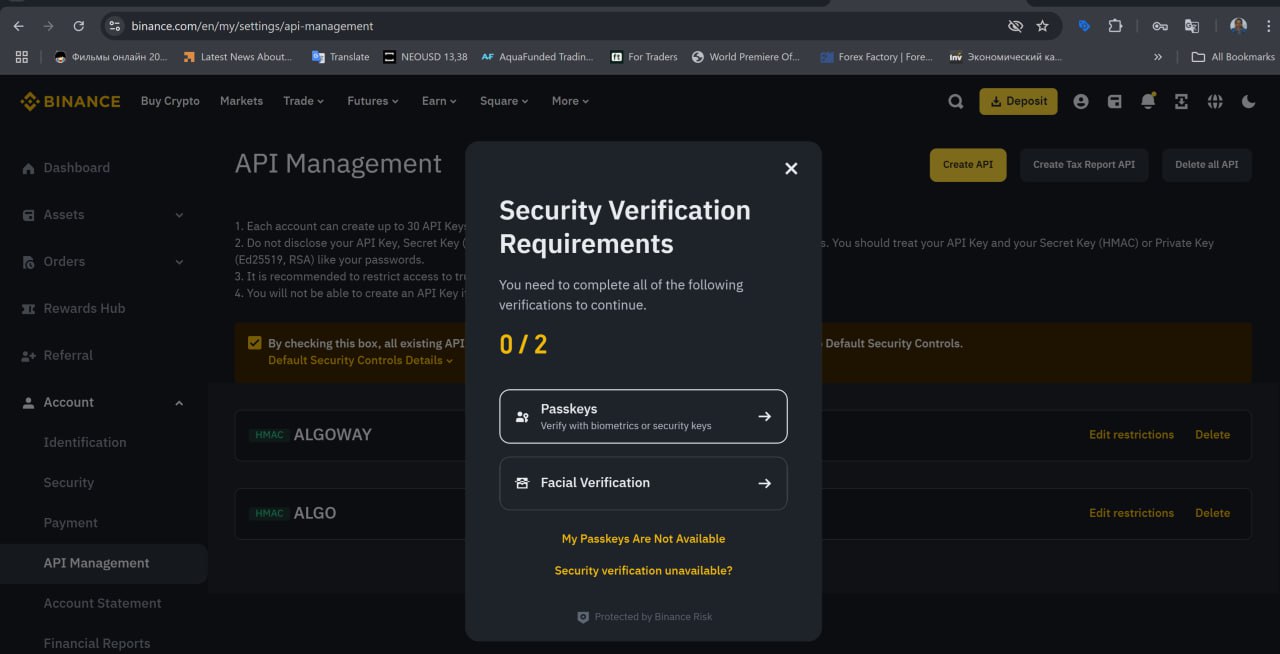
Start from Binance API Management and create a dedicated API key for AlgoWay. A dedicated key makes it easier to manage this specific automation route.
- Go to Binance API Management.
- Click Create API.
- Name the key clearly, for example
ALGOWAY. - Complete Binance security verification.
- Copy and save the API Key and Secret Key.
Enable only the permissions required for your selected setup:
- Enable Reading — required for account and symbol checks.
- Enable Spot & Margin Trading — required for Spot automation.
- Enable Futures — required for Futures or Perpetual automation.
For this kind of trading automation, withdrawal permission is not required.
Step 2. Create a Binance Webhook in AlgoWay
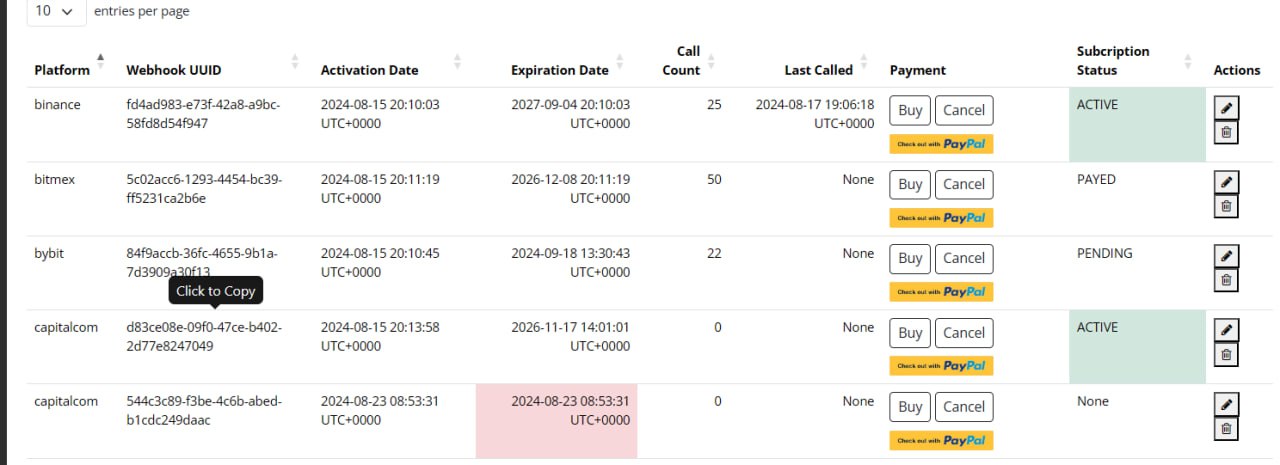
After the Binance API key and secret are ready, log in to AlgoWay and create a Binance webhook. This webhook will receive TradingView alerts and route them to Binance.
- Log in to your AlgoWay dashboard.
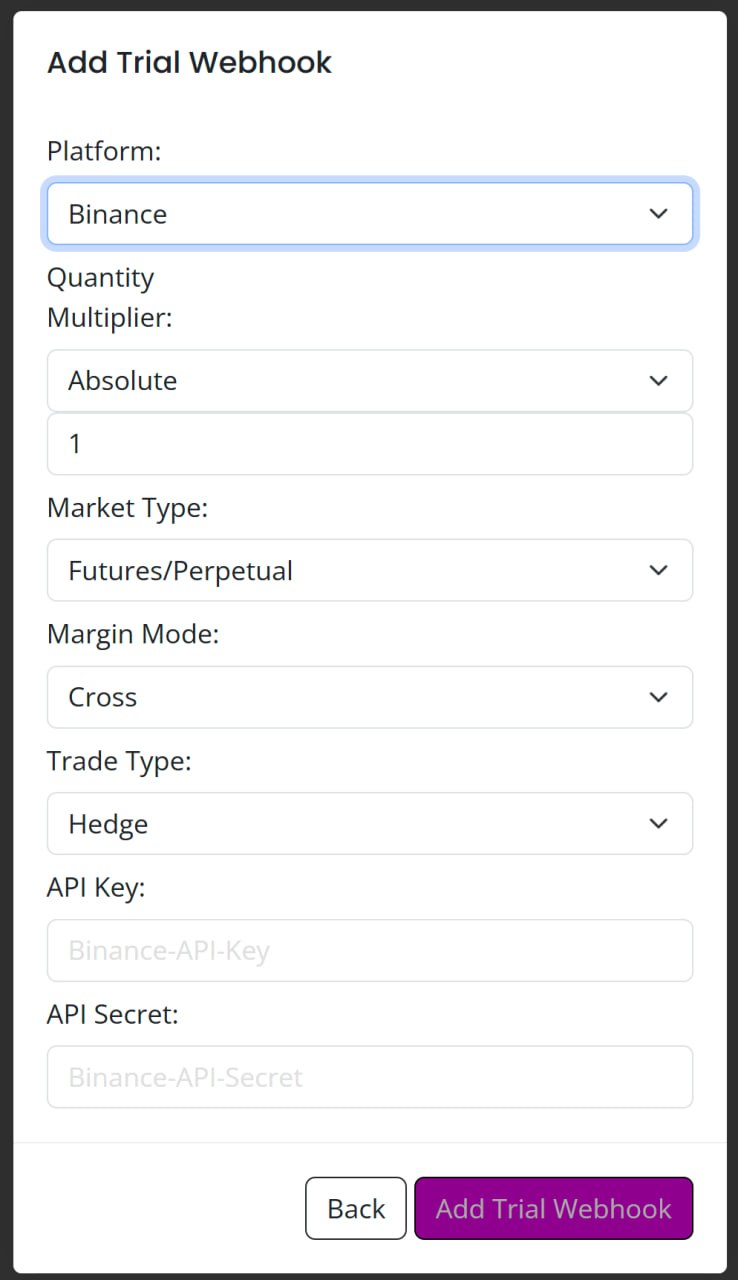
- Click Add Trial Webhook or Add Main Webhook.
- Select the source and destination for the automation route.
- Choose Binance as the destination platform.
- Paste the Binance API key and secret.
Main fields for a Binance webhook:
- Source (from): TradingView
- Platform (to): Binance
- Quantity Multiplier: Absolute or Leverage Based
- Market Type: Spot, Futures, or Perpetual depending on your available settings
- Margin Mode: Cross or Isolated for Futures
- Trade Type: Hedge or One-way
- API Key: your Binance API key
- API Secret: your Binance secret key
After saving the form, AlgoWay creates the Binance webhook and shows it in your dashboard.
Step 3. Test the Binance Webhook Before Connecting TradingView
Before using a live TradingView alert, send a test from AlgoWay. This confirms that the Binance API credentials, market type, symbol, and order settings are accepted.
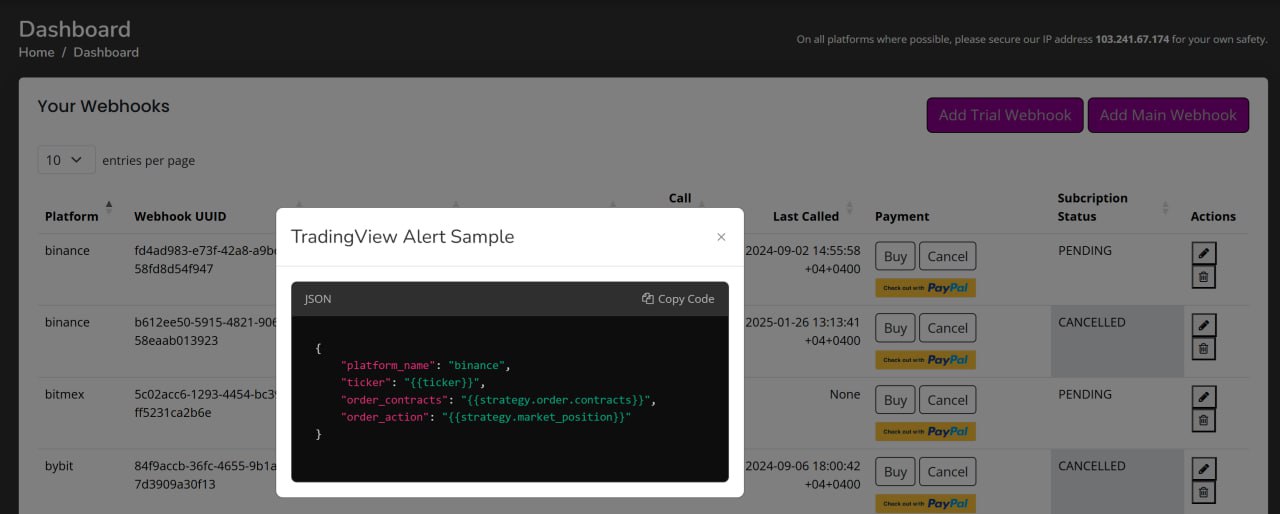
A basic test payload may look like this:
{
  "platform_name": "binance",
  "ticker": "BTCUSDT",
  "order_contracts": 0.001,
  "order_action": "buy"
}
Check the webhook logs after the test. If the test fails, inspect the API permission, symbol format, market type, margin settings, quantity, and Binance response.
Step 4. Create a TradingView Alert for Binance Automation
Open TradingView and create an alert for the symbol you want to automate, for example BTCUSDT, ETHUSDT, or another symbol supported by your selected Binance market.
In the TradingView alert settings, enable Webhook URL and paste the AlgoWay webhook URL.
The URL will use your unique webhook UUID:
https://algoway.co/your-webhook-uuidIn the message box, paste a valid JSON payload. AlgoWay expects structured JSON, not plain text.
Basic TradingView strategy alert JSON for Binance:
{
  "platform_name": "binance",
  "ticker": "{{ticker}}",
  "order_contracts": "{{strategy.order.contracts}}",
  "order_action": "{{strategy.market_position}}"
}
TradingView will replace placeholders with real values when the alert fires.
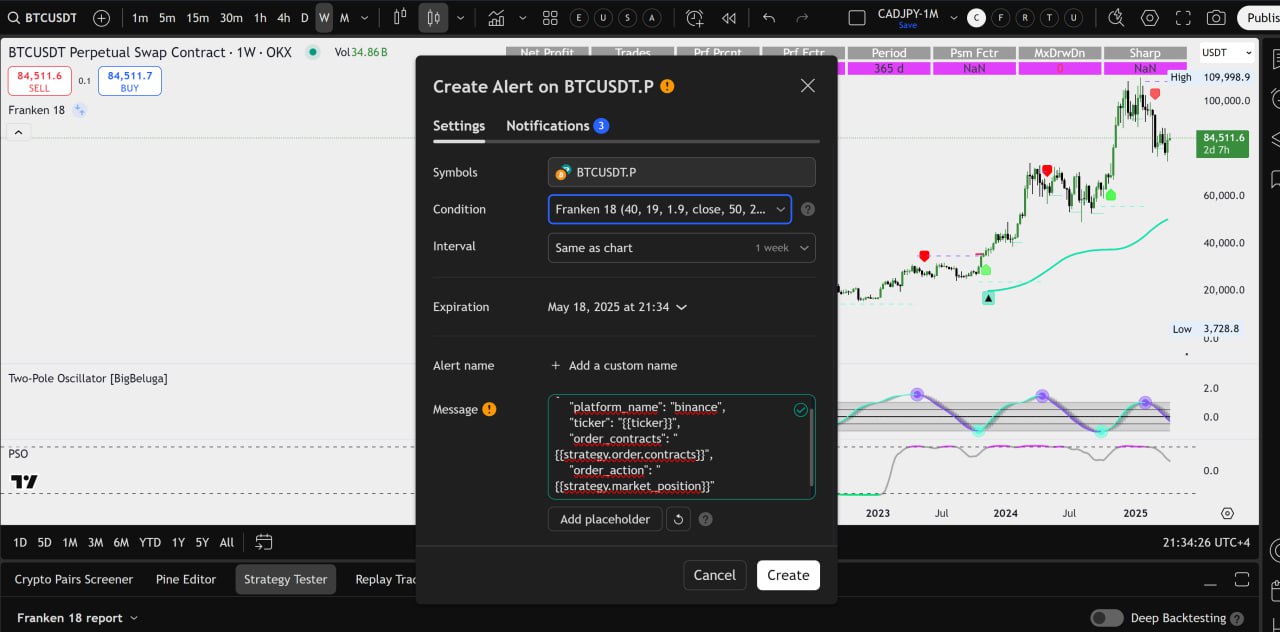
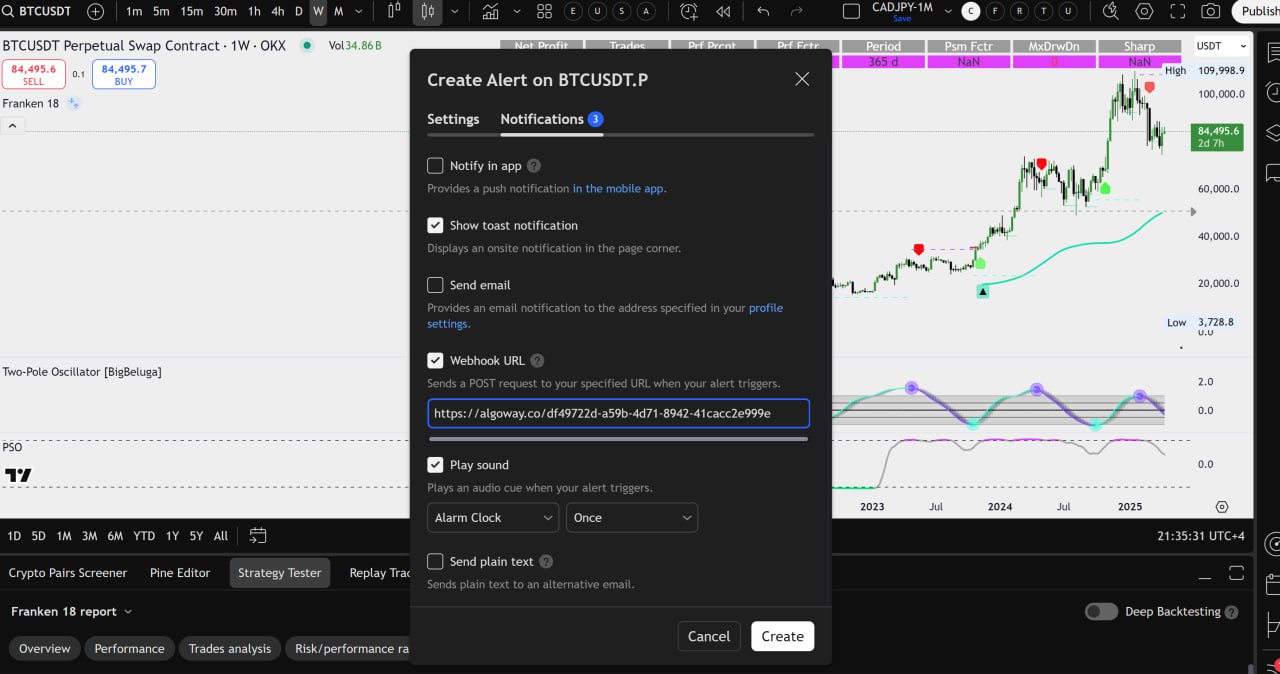
TradingView Strategy Alert Example for Binance
For TradingView strategies, the most common placeholders are:
{{ticker}}— the chart ticker;{{strategy.order.contracts}}— strategy order size;{{strategy.market_position}}— strategy position direction;{{close}}— current close price at alert time.
Example with price and a comment:
{
  "platform_name": "binance",
  "ticker": "{{ticker}}",
  "order_contracts": "{{strategy.order.contracts}}",
  "order_action": "{{strategy.market_position}}",
  "price": "{{close}}",
  "comment": "TradingView Binance automation via AlgoWay"
}
If your strategy sends long, short, or flat states, verify how your AlgoWay Binance webhook is expected to map these values before live use.
Indicator Alerts and Manual Alerts
Not every TradingView alert comes from a strategy. Some traders use indicator alerts, custom Pine Script alerts, or manual alert messages.
For indicator-based automation, the final TradingView message must still become valid AlgoWay JSON. You can prepare it manually or use AlgoWay dashboard tools:
- Message Wizard — helps build a structured AlgoWay webhook message.
- AlgoWay AI — helps convert a text trading idea into valid JSON.
This is useful when an indicator outputs text and you need to transform that text into a Binance automation command.
Required JSON Fields for Binance Webhook Automation
A basic Binance webhook message for AlgoWay usually includes these fields:
| Field | Example | Purpose |
|---|---|---|
platform_name |
binance |
Tells AlgoWay to route the command to Binance. |
ticker |
BTCUSDT |
Defines the Binance symbol. |
order_contracts |
0.001 |
Defines the order quantity. |
order_action |
buy |
Defines the action that AlgoWay should route. |
Depending on your AlgoWay configuration and Binance mode, additional fields may be used for pricing, reduce-only behavior, comments, or risk logic. Test every new field before production use.
Binance Spot vs Binance Futures Automation
Before sending alerts, decide which Binance market your webhook should use.
Binance Spot
Spot automation is usually simpler. The order uses available balance in the selected asset or quote currency. The signal should use a symbol that exists in Binance Spot and a quantity accepted by Binance trading rules.
Binance Futures
Futures automation requires more settings. Margin mode, leverage, hedge mode, one-way mode, and quantity logic can affect the final order. Configure these settings carefully in AlgoWay and Binance before using live alerts.
If you are unsure whether your strategy should use Spot or Futures, test the full route with minimal size first and inspect the logs.
Common Binance Webhook Problems
Invalid TradingView JSON
TradingView must send valid JSON. Use double quotes around string values, remove comments from JSON, and check commas and brackets.
Wrong Binance API Permissions
If Spot or Futures permission is missing, Binance may reject the order. Enable only the permissions required by the selected trading mode.
Wrong Market Type
A symbol or order format that works in Spot may not work in Futures, and the reverse is also true. Match the webhook market type with the intended Binance market.
Quantity Is Too Small
Binance applies symbol-specific trading rules, including minimum quantity and notional value. If the order size is too small, Binance can reject it.
TradingView Alert Sends the Wrong Direction
Check how your TradingView strategy outputs position values. A strategy placeholder may not always produce the exact action you expect for your AlgoWay mapping.
Webhook URL Is Missing
If the webhook URL is not enabled in TradingView, the alert will not reach AlgoWay. Confirm that the AlgoWay URL is pasted into the webhook field, not only into the message field.
Why Use AlgoWay Instead of a Custom Binance Trading Bot?
You can build your own TradingView to Binance bot. That requires a public webhook endpoint, server hosting, Binance API integration, JSON validation, execution logic, error handling, logging, and maintenance.
AlgoWay is built for traders who want the automation route without maintaining that infrastructure. You create the webhook in the dashboard, connect Binance API credentials, paste the webhook URL into TradingView, and monitor the result in AlgoWay logs.
This gives you:
- a no-code TradingView to Binance webhook bridge;
- support for Binance automation from TradingView alerts;
- a structured JSON workflow;
- centralized webhook logs;
- less server maintenance;
- one dashboard for multiple trading destinations.
Related AlgoWay Guides
These guides help complete the Binance automation workflow:
- How to create a webhook in TradingView
- TradingView webhook alerts and automation basics
- AlgoWay JSON schema for automated trading webhooks
- How to fix TradingView webhook Error 415
- AlgoWay webhook pricing guide
- AI Telegram signal copier for AlgoWay
Key Takeaway
To automate Binance trading from TradingView, you need three things: Binance API credentials, an AlgoWay Binance webhook, and a valid TradingView JSON alert message. Once those parts are configured, AlgoWay can receive TradingView alerts and route them to Binance.
AlgoWay turns TradingView alerts into Binance webhook automation without forcing you to run your own crypto trading bot server.